





Quick Facts
| Client Name | Tech Mahindra |
| Location | Hyderabad, Telangana |
| Scope | Comprehensive (A+I) |
| Region | Hyderabad |
| Program | Academic and Faculty spaces catering to LLB and LLM candidates |
| Built-up Area | 1,30,600 Sq.Ft |
| Plot Area | 3.6 Acres |
| Status | Concept Proposal |
Description
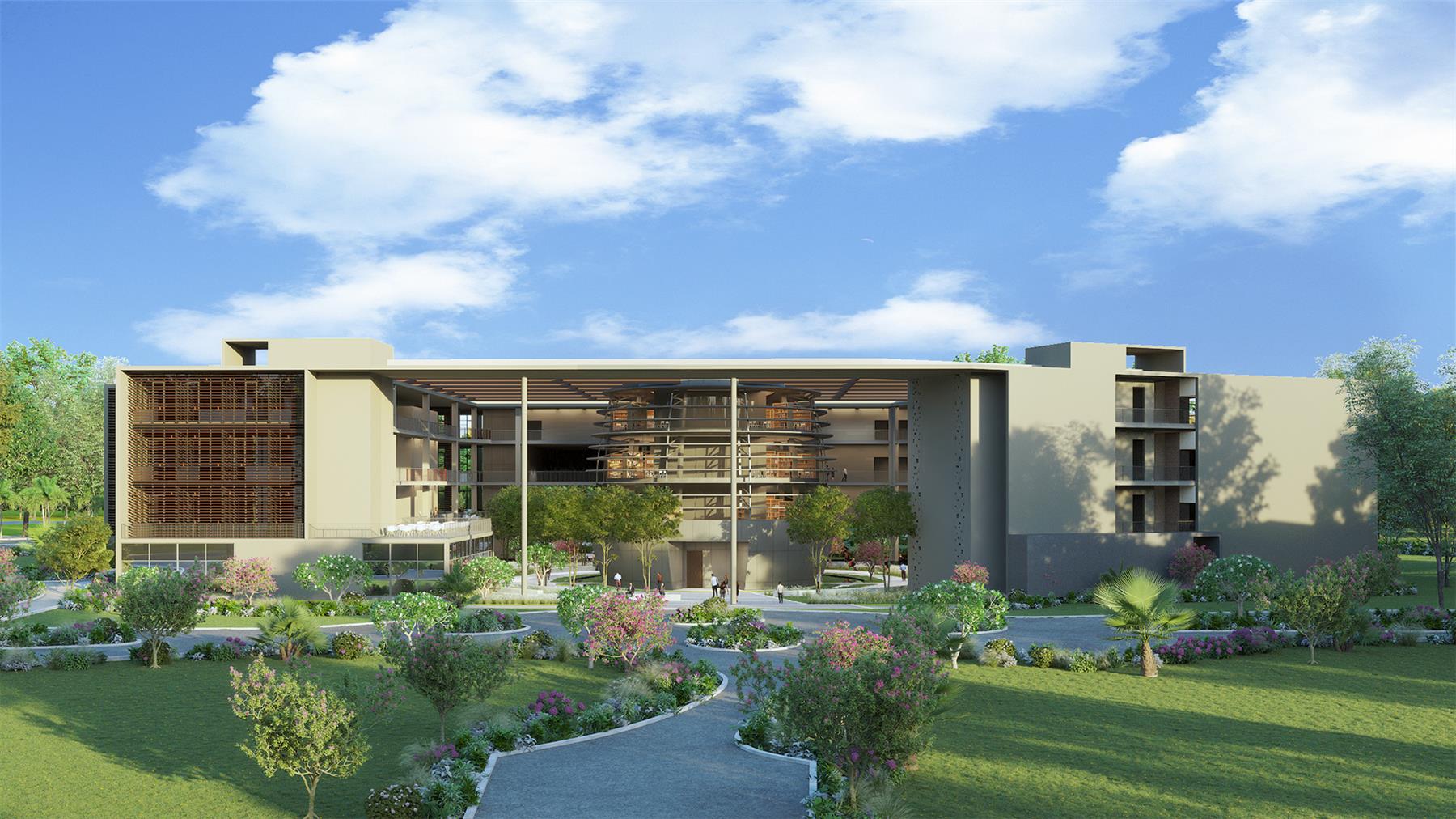
The Mahindra University School of Law forms a pivotal part of the university’s long-term academic vision for its campus in Hyderabad. Set within a 44-acre educational cluster, the Law School occupies a 3.6-acre site defined by natural topography, forest edges, and pedestrian linkages that tie into the larger campus network. Strategically located near the Outer Ring Road, the site benefits from strong regional connectivity while maintaining the quiet, contemplative atmosphere ideal for legal education.
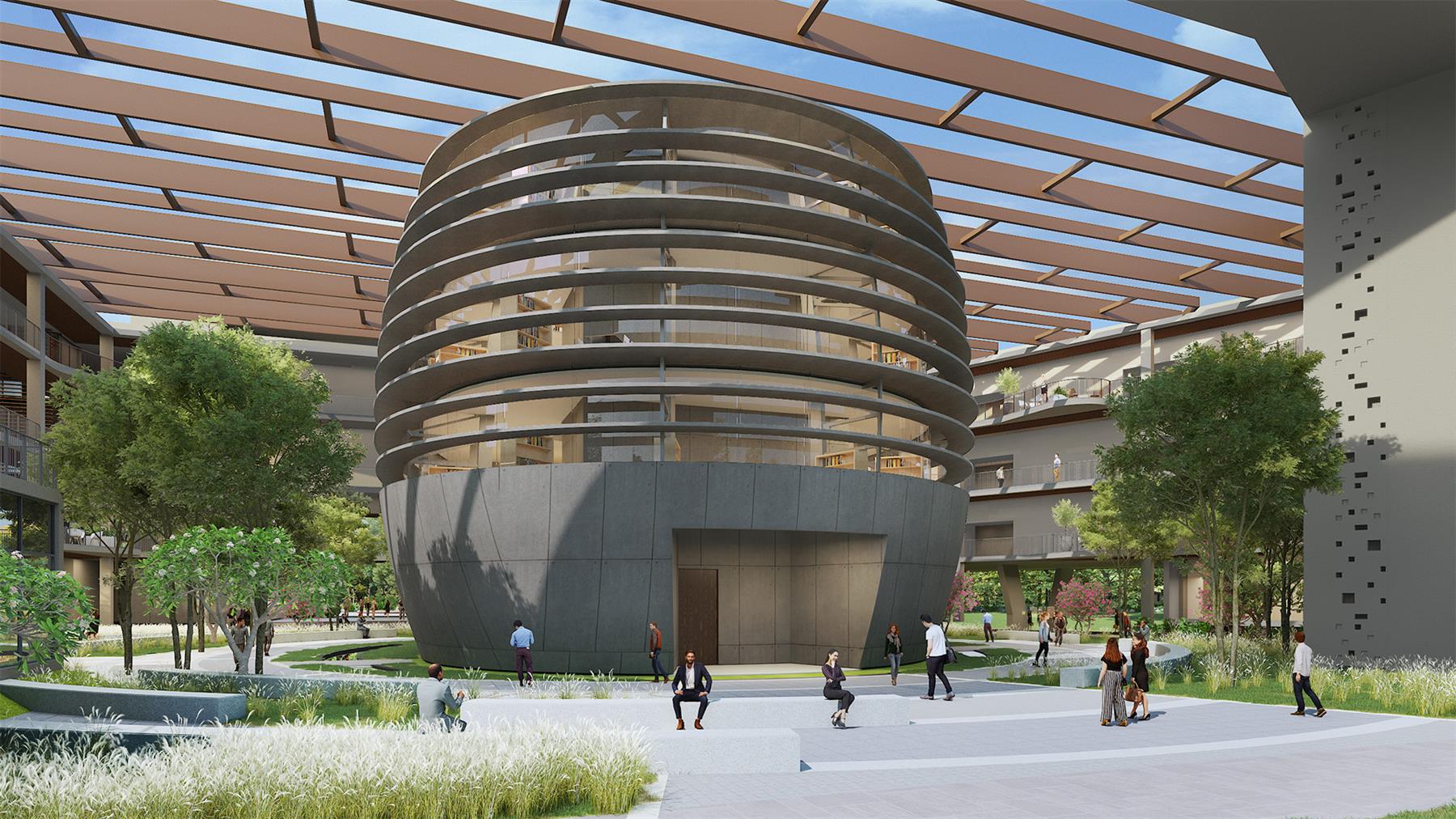
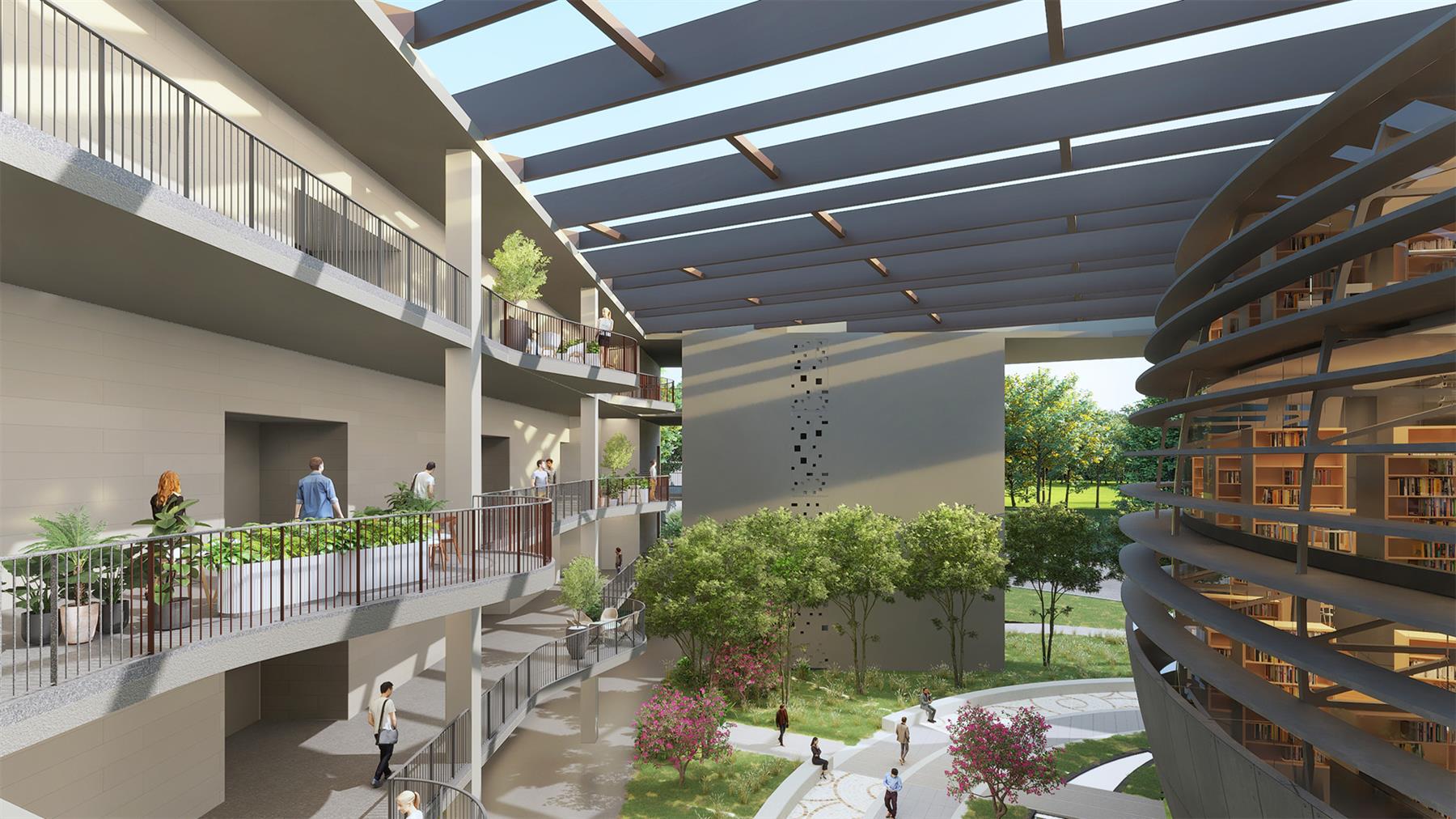
The master plan draws from the concept of a “Forest Campus,” inspired by ancient Indian learning environments. It reinterprets this ethos into a pedestrian-focused, environmentally sensitive framework that promotes interaction, inclusivity, and reflection. The design envisions the Law School as a porous, socially active institution where courtyards, shaded corridors, and landscaped plazas function as natural extensions of academic life. Anchored by the Moot Court and Library, the layout balances formality and openness, creating a rhythm of spaces that foster both focused study and spontaneous collaboration.
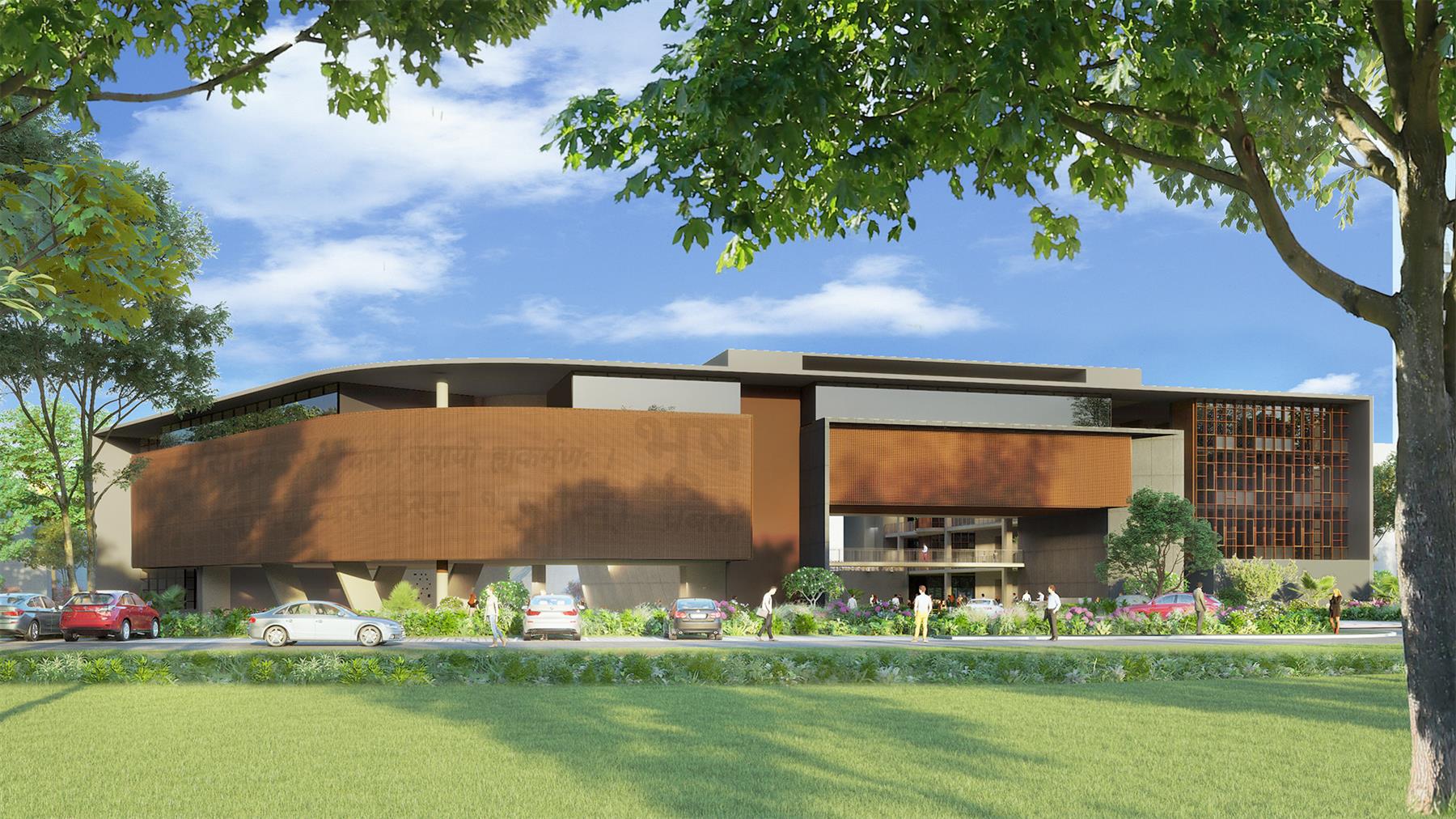
Structurally, the Law School employs an elevated massing strategy that allows natural light and ventilation to flow underneath, reinforcing the building’s visual and climatic integration with its surroundings. The material palette featuring exposed concrete, perforated screens, and textured stone balances durability with aesthetic restraint. Landscape design extends the architectural intent through layered vegetation, water bodies, and mandala-inspired pathways that merge symbolism with function.
Together, these elements define a campus landmark that blends academic rigor with environmental consciousness. The School of Law stands as a model for integrated educational environments; contextual, flexible, and future-ready in both vision and form.
Credits & Recognition
Team
Architecture: Mishkat Ahmed, Aastha Wadhwa, Sanjay Srinivasan