

Quick Facts
| Client Name | Breach Candy Hospital Trust |
| Location | Mumbai |
| Scope | Interior Design |
| Region | Mumbai |
| Program | 84 Beds, 2 Robotic OT’s, 13 OPD’s |
| Built-up Area | 75,800 Sq.Ft. |
| Status | Completed |
Description
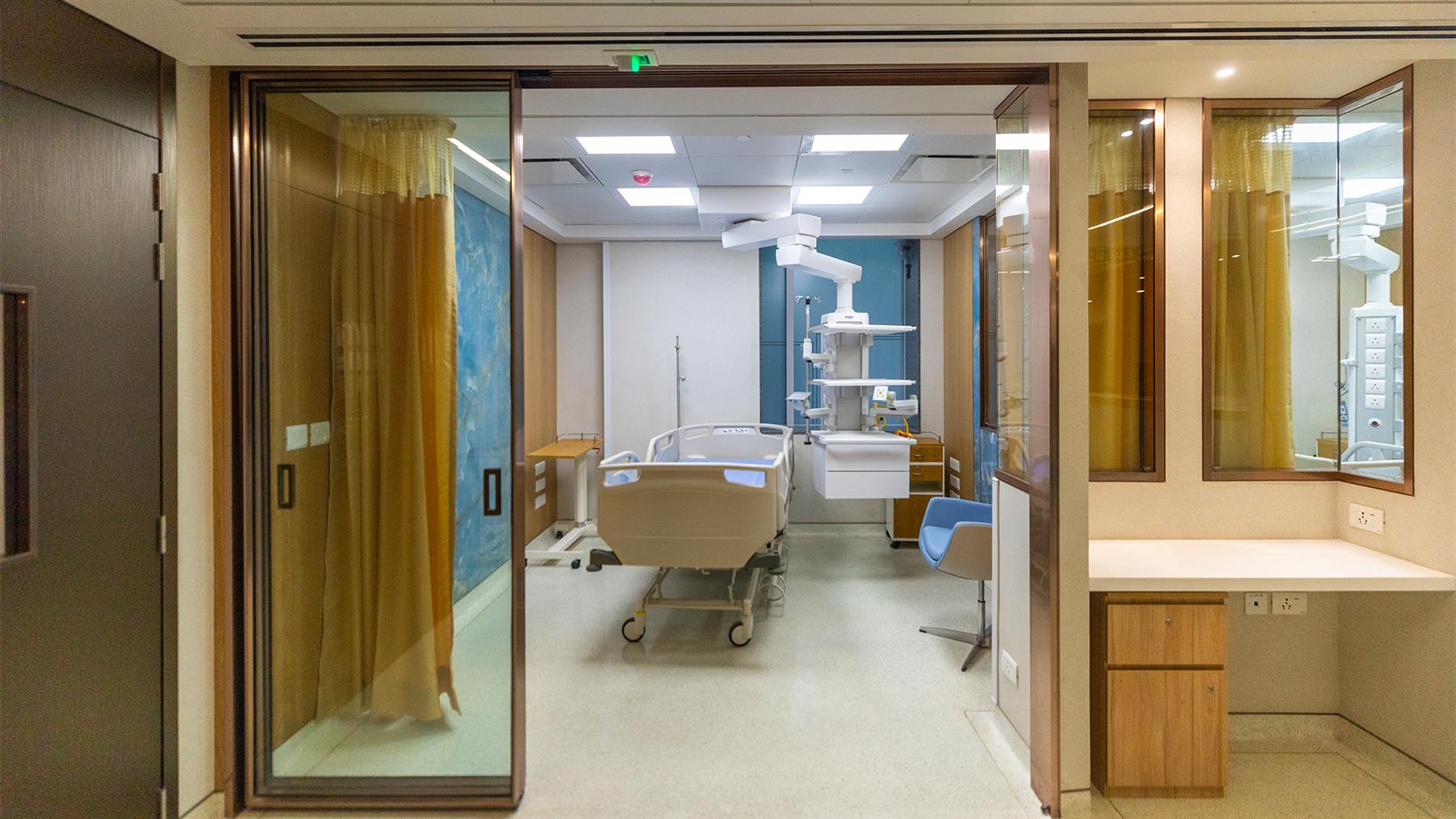
Conceived as a vertical extension of an active Art Deco hospital complex, the New Tower at Breach Candy Hospital responds to a dual imperative: to increase inpatient capacity while preserving the campus's emotional, architectural, and operational continuity. The project introduces 84 inpatient beds, 13 outpatient departments, and two robotic operation theatres across a basement, ground floor, and 11 upper levels. Located within a fully functioning hospital, the building was planned and executed under stringent infection-control protocols, ensuring uninterrupted clinical operations throughout construction.
Planning for Precision in an Operational Healthcare Environment
Located within Mumbai’s dense coastal fabric and abutting the Arabian Sea, the tower has been positioned with surgical precision on a constrained site. The planning framework prioritises patient safety, clinical efficiency, and logistical clarity, addressing the challenges of vertical healthcare delivery within a live medical environment. Clinical functions are stacked and zoned to optimise adjacencies: outpatient departments and surgical theatres are located at lower levels to improve accessibility and control movement, while critical care and inpatient wards are organised above to ensure privacy, safety, and uninterrupted clinical workflows.
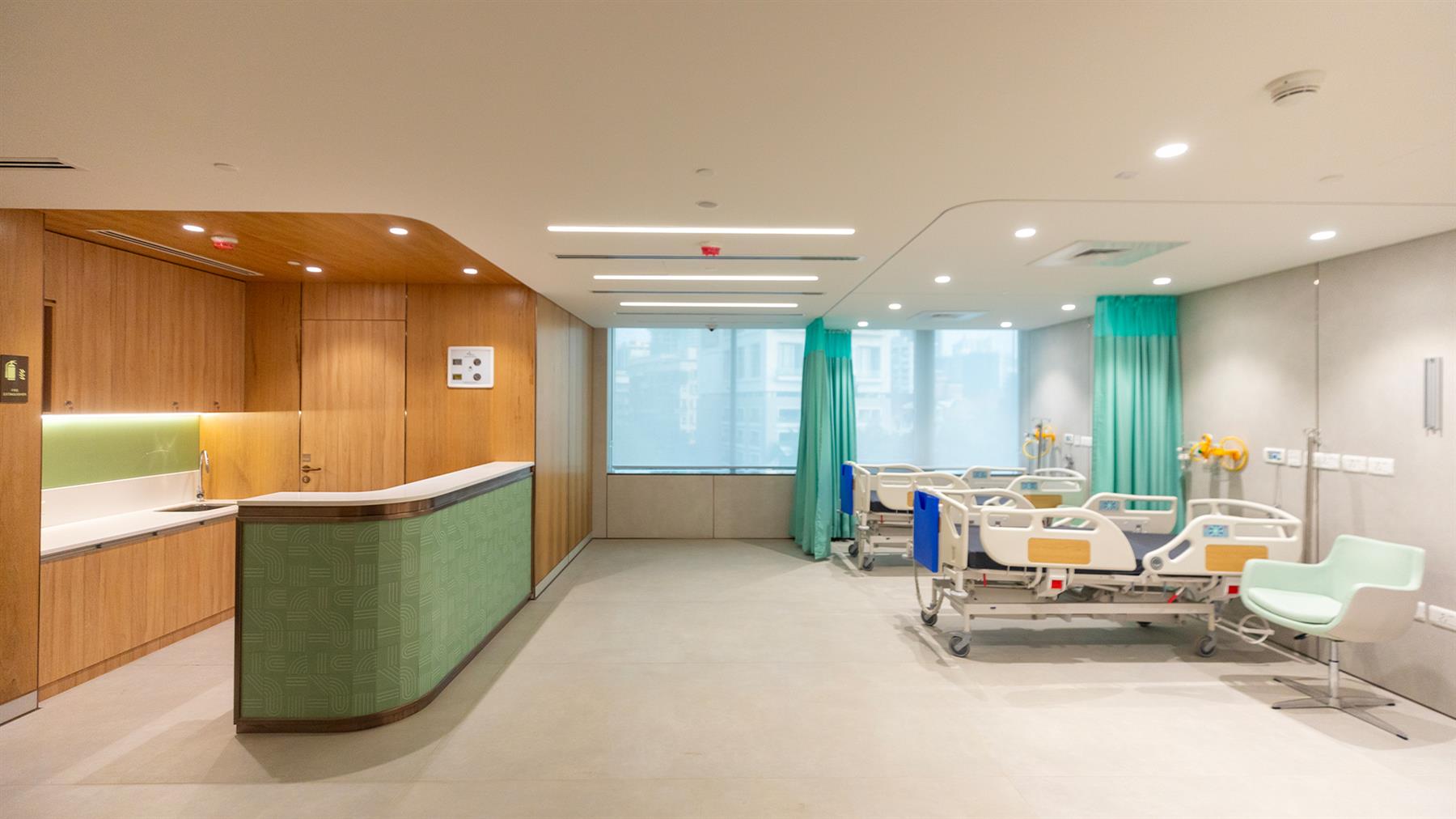
As part of the hospital’s disaster preparedness and future-proofing strategy, the 7th floor has been specifically designed as a dedicated COVID floor. The infrastructure enables rapid isolation, controlled circulation, and quick conversion in response to emerging public health emergencies, allowing the hospital to adapt swiftly to evolving clinical demands without disrupting overall operations.
Vertical Zoning and Intuitive Circulation
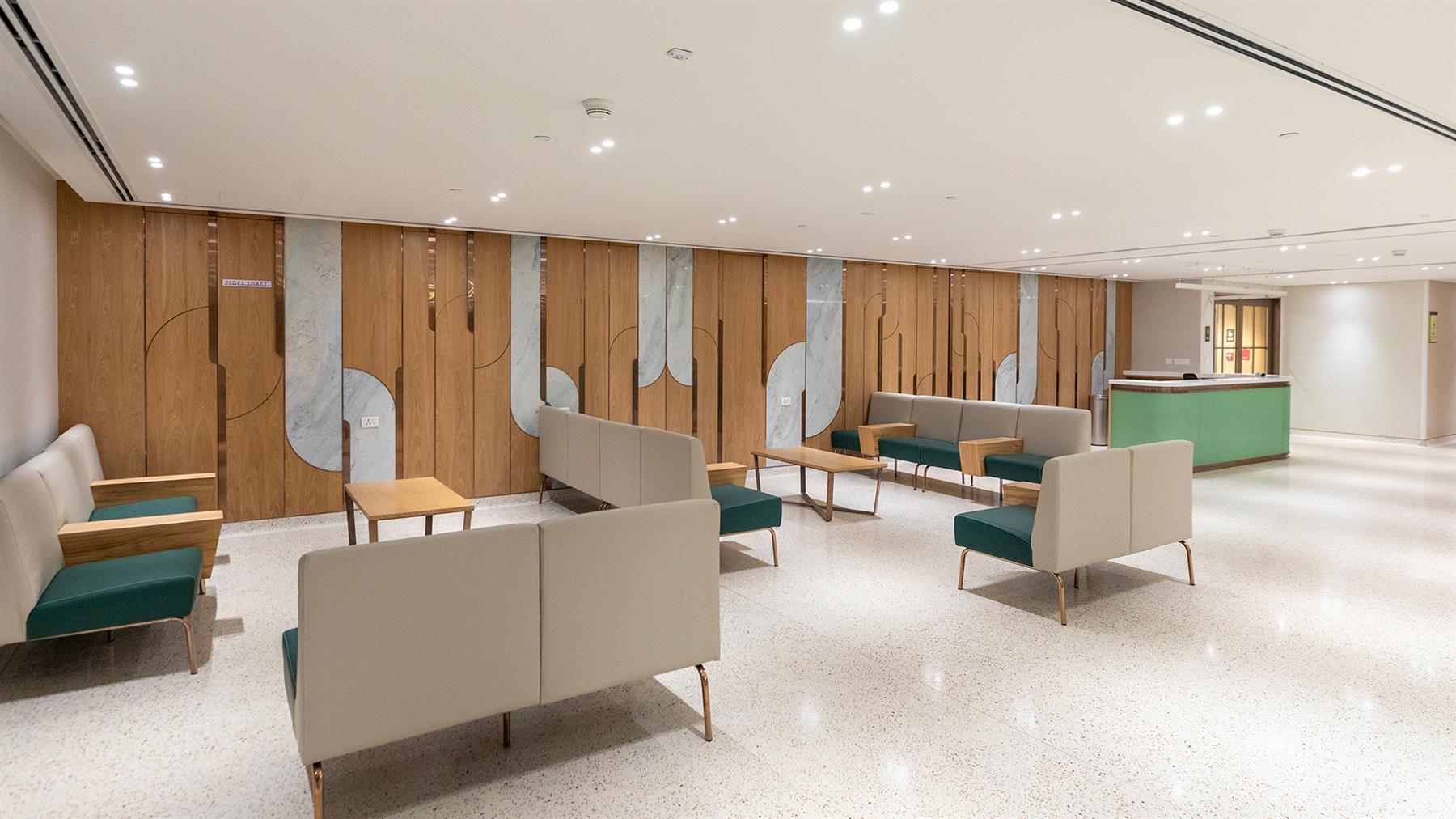
Clear segregation of patient, staff, and service movement underpins the tower’s planning logic. Reception and waiting areas are anchored at grade, establishing a legible public interface. Dedicated vertical cores structure circulation, minimising cross-traffic and reducing stress points within the hospital environment. This layered organisation enhances operational efficiency while supporting intuitive navigation for patients and visitors across all levels.
Interiors Informed by Human Experience
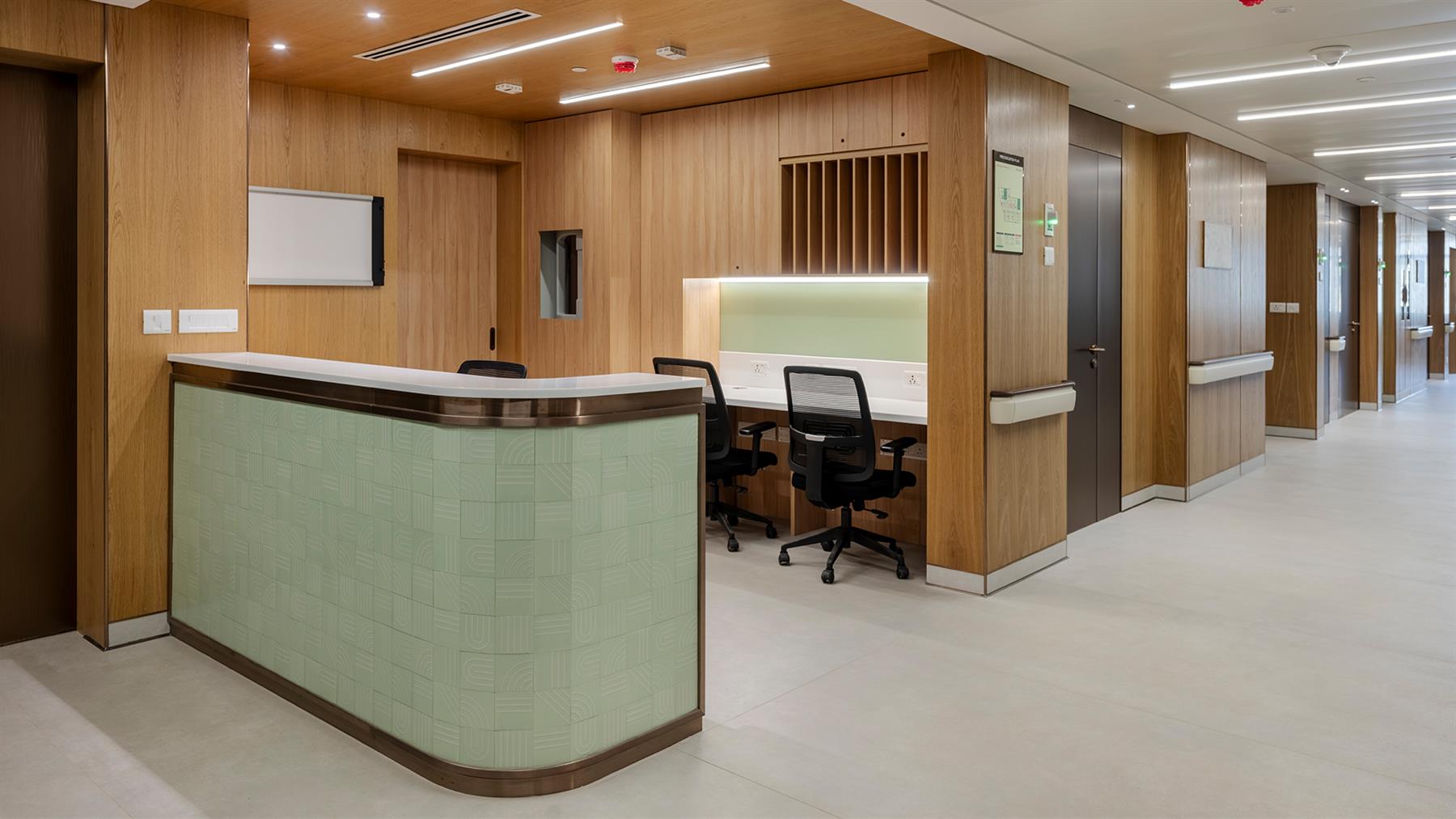
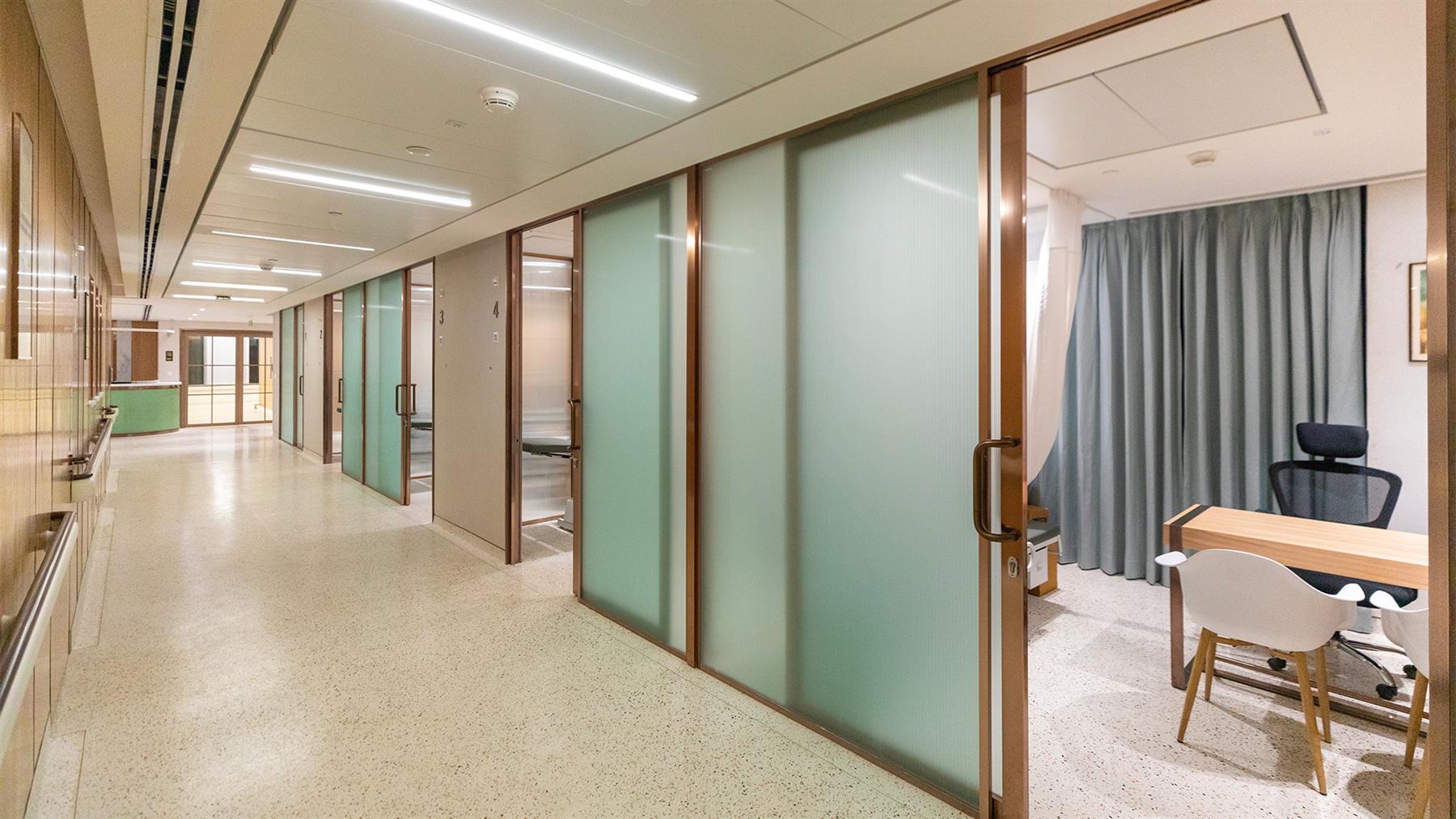
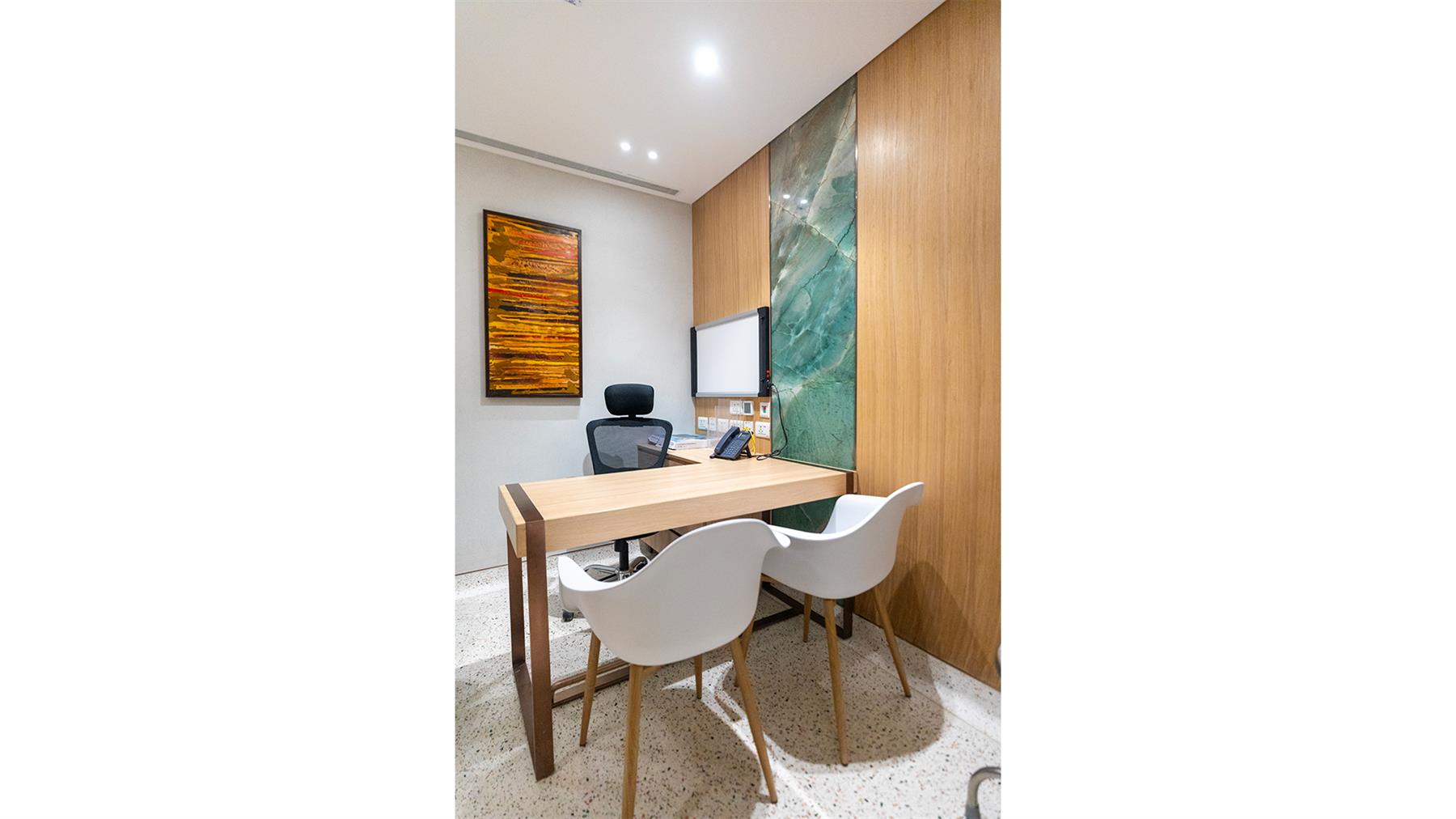
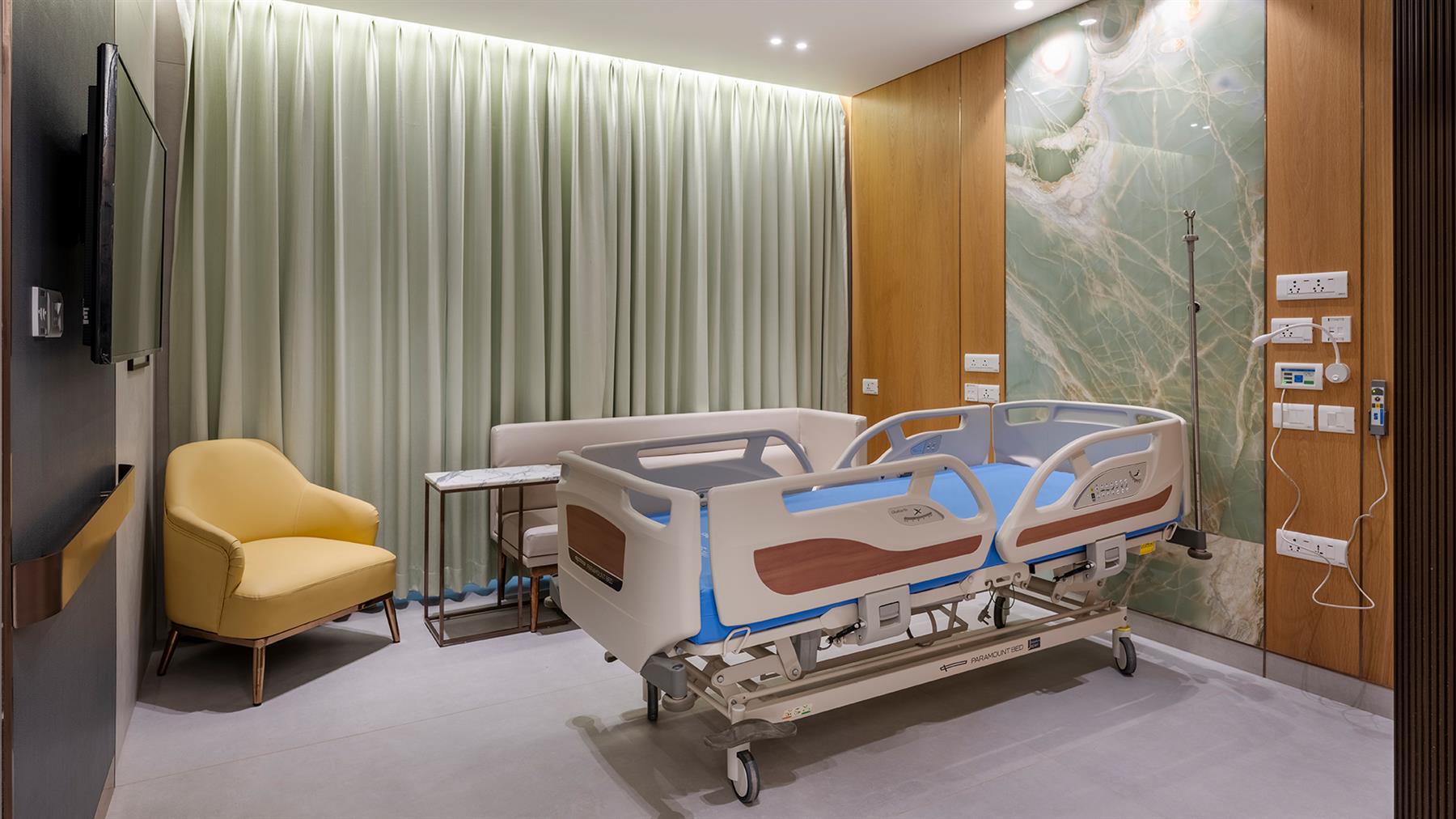
The interior architecture draws from Breach Candy Hospital’s Art Deco lineage and Mumbai’s maritime ecology. Curved geometries, coral-inspired colour palettes, and fluid spatial transitions establish a visual language that balances openness with privacy. Colour coding is strategically incorporated to aid wayfinding and orientation, reinforcing cognitive ease in a complex clinical environment.
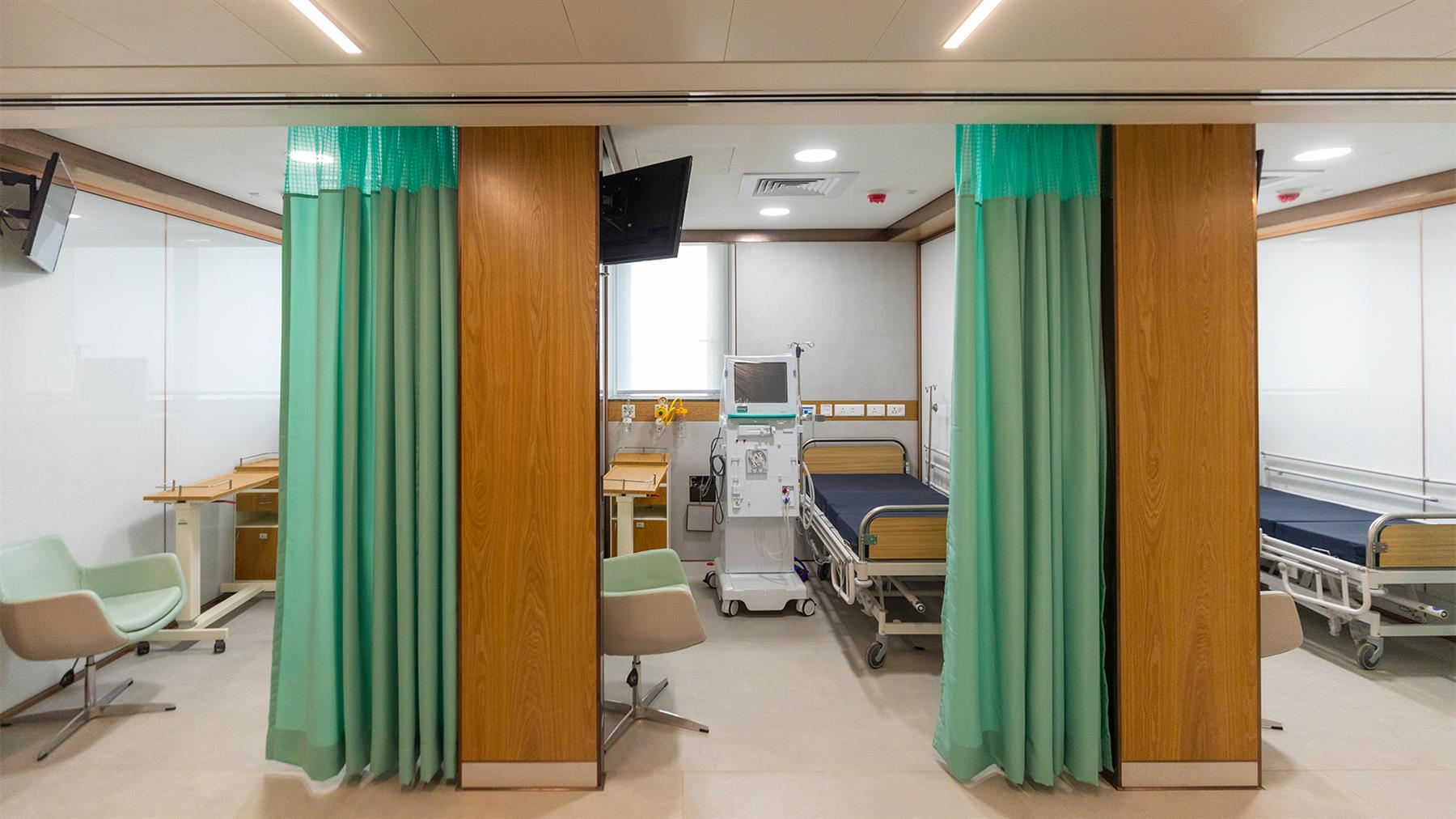
Material choices respond directly to healthcare planning requirements. Epoxy flooring, non-porous wall finishes, and rounded junctions support infection control, ease of maintenance, and long-term durability. These technical decisions are integrated seamlessly into a calm and coherent interior environment rather than expressed as overt clinical markers.
Designing for Emotional Well-being
Public and patient-facing spaces are calibrated to reduce anxiety and sensory overload. Tensile fabric ceilings with integrated lighting diffuse glare, while acoustically controlled environments mitigate noise typical of high-intensity medical settings. Lighting, materiality, and spatial proportions are carefully modulated to support emotional comfort, recognising the psychological dimension of healing alongside clinical performance.
A Contemporary Continuation of Legacy
Rather than asserting itself as a standalone object, the New Tower operates as a contextual extension of Breach Candy Hospital’s evolving identity. It consolidates advanced clinical systems and robotic surgical capabilities within a spatial framework that remains grounded in legacy, care, and human experience. The project demonstrates how contemporary healthcare infrastructure can be embedded within historic institutional campuses through precise planning, contextual sensitivity, and architecture that serves both function and feeling.
Credits & Recognition
Team
Interior: Manoj Choudhary, Kirtiman Sinha, Rachana Soni, Akshata Bane
Photography: Prashant Bhat, NARSI